
Introduction
Dropping your phone in water can be stressful. Whether it has fallen into a sink, bath, swimming pool, or a spilled drink has soaked it, one piece of advice seems to appear everywhere: put the phone in a bag of uncooked rice and leave it there.
But does the rice trick actually work?
Unfortunately, rice is not a reliable way to repair a water-damaged phone. While it may seem like rice is absorbing moisture from the device, it cannot remove liquid and contaminants trapped inside the phone where the most serious damage can occur.
If your phone has suffered liquid damage, acting quickly and getting the right help can make a significant difference.
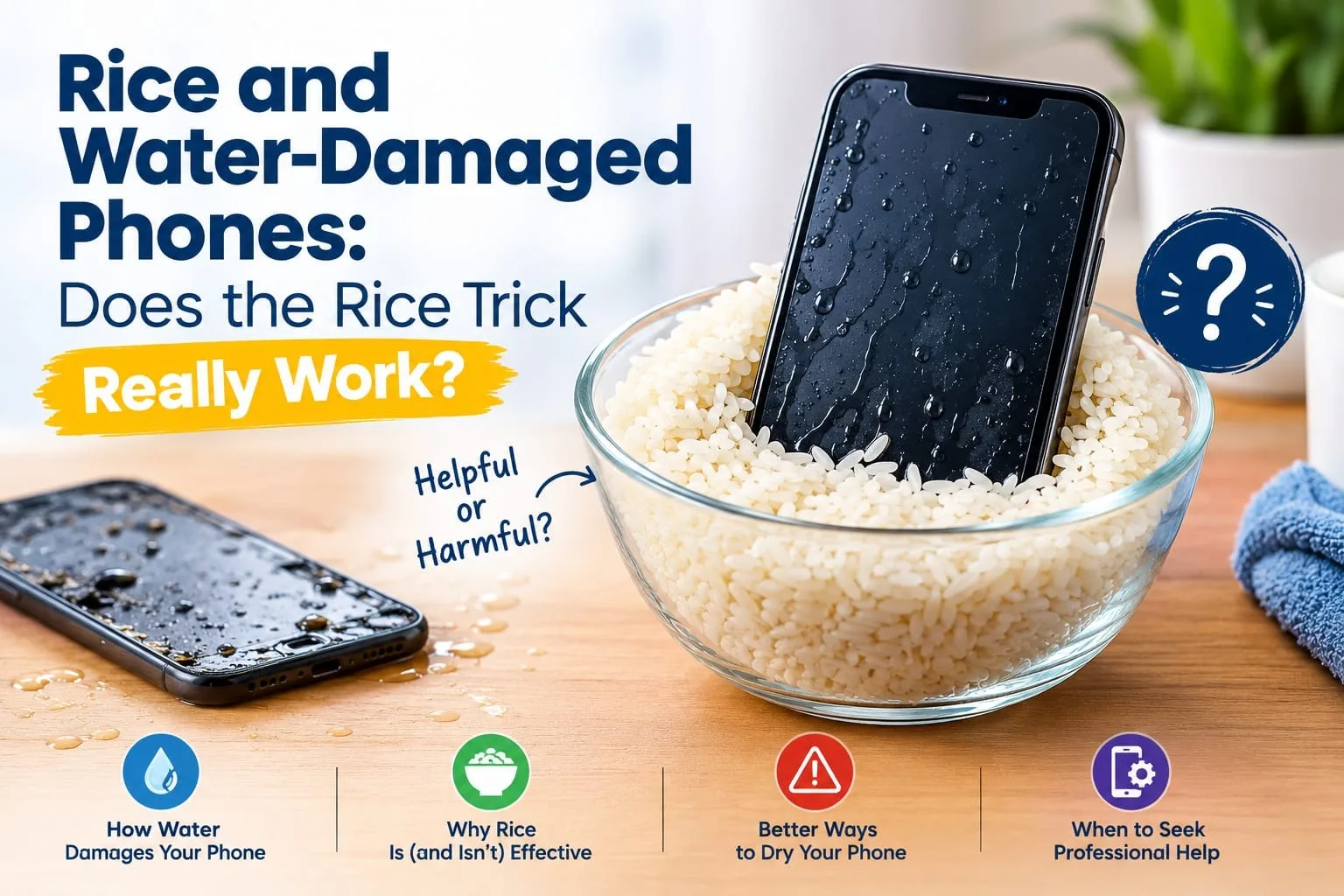
Why Do People Put Phones in Rice?
The idea behind the rice trick is fairly simple. Rice is a dry material, so the theory is that it will absorb moisture from a wet phone.
This advice became popular because some people reported that their phones started working again after spending several hours or days in a bag of rice.
However, there is an important distinction: a phone working after being placed in rice does not mean the rice repaired it.
In some cases, the amount of liquid that entered the phone may have been small enough that the device continued working after it dried naturally. The rice may simply have been present while the phone was drying.
Research and repair experience have found that uncooked rice is not an effective solution for removing water from inside electronics. iFixit, for example, specifically advises against using rice for water-damaged devices.
Does Rice Actually Dry Out a Water-Damaged Phone?
Not effectively.
The main problem is that water damage is not limited to moisture sitting on the outside of your phone.
Modern smartphones contain tightly packed components, connectors and circuit boards. If liquid gets inside, it can reach areas that rice cannot access.
Even more importantly, water is not always the only problem.
Liquids can contain minerals, salts and other contaminants. As the liquid evaporates, these substances can remain behind and contribute to corrosion or electrical problems.
That means simply waiting for the phone to dry does not necessarily mean the damage has stopped.
The Bigger Problem: Corrosion
One of the biggest risks after liquid enters a phone is corrosion.
When moisture and contaminants come into contact with electronic components, corrosion can develop on connectors and circuit-board components. The damage may not always be immediately visible.
This is why a water-damaged phone can sometimes appear to work normally at first and then develop problems hours or days later.
For example, you might initially be able to:
Turn the phone on
Make calls
Use the touchscreen
Access your photos
Connect to Wi-Fi
But later you could experience:
Charging problems
Battery issues
A non-working microphone or speaker
Camera problems
Random restarts
Touchscreen faults
Overheating
Failure to turn on
The longer liquid and contaminants remain inside the device, the greater the opportunity for corrosion and further damage.
What Should You Do If Your Phone Gets Wet?
If your phone has been exposed to water, the first priority is to minimise further electrical damage.
1. Remove It From the Liquid
Get the phone away from the source of the liquid as quickly and safely as possible.
If the device is connected to a charger or another power source, take appropriate precautions before disconnecting it.
2. Turn the Phone Off
If the phone is still switched on, turn it off.
If it has already switched off, do not keep trying to turn it back on.
Repeatedly powering up a wet device can increase the risk of electrical damage.
3. Don’t Plug It In
One of the biggest mistakes people make is connecting a wet phone to a charger to see whether it still works.
Avoid charging the device until it has been properly assessed and is safe to power on.
4. Don’t Put It in Rice
Skip the rice.
Rice does not address the liquid and contaminants that may be trapped inside the phone, and small particles or dust from rice can potentially enter ports and openings.
5. Get Professional Help
Water damage can be more complicated than simply drying the outside of the device.
A professional repair technician can inspect the phone for signs of liquid ingress, corrosion and component damage and determine whether cleaning or component-level repair may be possible.
What About Silica Gel?
You may also have heard that silica gel packets are better than rice.
Silica gel is designed to absorb moisture and is generally more effective as a desiccant than rice. However, simply placing a water-damaged phone next to silica gel does not necessarily remove liquid trapped inside the device or reverse corrosion.
The key issue is that drying the phone is only part of the problem.
If liquid has reached the internal electronics, the device may need to be opened and professionally inspected and cleaned.
Can a Water-Damaged Phone Be Repaired?
In many cases, water-damaged phones can be repaired, but the outcome depends on several factors.
These can include:
How long the phone was exposed to liquid
How much liquid entered the device
What type of liquid was involved
Whether the phone was powered on
Whether it was connected to a charger
How quickly it received professional attention
The extent of corrosion or component damage
Fresh water damage may present a different challenge from exposure to seawater, soft drinks, coffee or other liquids containing salts, sugars or chemicals.
This is one reason it is important not to assume that a phone is fine simply because it switches on after getting wet.
What If My Phone Still Works After Getting Wet?
Don’t assume everything is okay.
A phone that continues to operate after liquid exposure may still have moisture or contaminants inside it.
If you notice unusual behaviour — such as overheating, charging problems, flickering, speaker issues or unexpected shutdowns — stop using the device and seek professional assistance.
Even if everything appears normal, a professional inspection can help identify potential liquid damage before it develops into a more serious fault.
Why Professional Water-Damage Repair Matters
Water damage requires more than simply making the outside of a phone dry.
Professional technicians can inspect the internal components and look for evidence of liquid ingress and corrosion. Depending on the device and the extent of the damage, specialist cleaning and component repair may help recover a phone that might otherwise be considered unusable.
For valuable devices, professional assessment can also be particularly important when the phone contains irreplaceable photographs, contacts, documents or other data.
The Bottom Line: Rice Is Not a Phone Repair Solution
So, does the rice trick really work?
No — you shouldn’t rely on rice to repair a water-damaged phone.
A phone may sometimes appear to recover after being left in rice, but that does not mean the rice caused the recovery. The device may simply have survived the initial exposure or dried naturally.
The bigger concern is what is happening inside the phone. Liquid and contaminants can lead to corrosion and electrical problems that may appear immediately or develop later.
If your phone gets wet, act quickly: remove it from the liquid, switch it off, don’t charge it, skip the rice, and consider professional inspection and repair.
If your device has suffered water or liquid damage, Hampstead Tech can assess the problem and advise you on the most appropriate repair options.
Don’t let the rice trick cost you valuable time — professional help may give your device a better chance of recovery.
Frequently Asked Questions
Can I put my wet phone in rice overnight?
It is not recommended. Rice is not an effective treatment for liquid trapped inside a phone and does not address corrosion or contaminants on internal components.
How long should I leave a wet phone before turning it on?
If liquid has entered the device, avoid repeatedly testing or charging it. The safest approach is to have it assessed before powering it on, particularly if the phone was submerged or exposed to a significant amount of liquid.
Does rice remove water from a phone?
Rice can absorb some moisture from its surrounding environment, but it cannot reliably remove liquid trapped inside a modern smartphone or clean contaminants from electronic components.
Can a phone work after water damage?
Yes. Some phones continue working after liquid exposure, but this does not guarantee that there is no internal damage. Corrosion and other faults can develop later.
Is water damage covered by a phone warranty?
Coverage depends on the manufacturer, warranty terms and the circumstances of the damage. Liquid damage is commonly treated differently from manufacturing defects, so check the specific terms for your device.
Need this fixed?
We repair these at our workshop at 47 Hampstead High Street, London NW3 1QG. Read more about phone repair in Hampstead, or book a repair online.